Mostrando las entradas con la etiqueta kaizen. Mostrar todas las entradas

miércoles, 26 de octubre de 2016

Zero Defects – Increasing the Troubleshooting Technique on PCBA’s and Electronics Devises.

In kaizen events it is very common to be confused in the main objective of Zero Defects. Many people focus more on how to fill out the forms from their computer and desktop. The formats such as Ishikawa, 5 whys, 8D and others; don’t need to be filling out just as requirement.
Obviously formats helps a lot, however, the most important from my point of view and based on my own experience it is to understand Sangen Shugi,
Genba.
Genbutsu.
Genjitsu.


The consultant in this case should guide the team to touch the product and go discarding possible causes or failure modes that may cause the defect, step by step, until they find the root cause.

The team therefore should be documenting the formats with real information, and this must be handwritten in Genba, with the Real Product with Real Data.

In these examples, you can see how the teams actually inquired, finding, which is outside the standard within the product, drawing and taking pictures of the search process and discard the evidence one to one to be completely convinced. And if possible many teams have also duplicated the defects to understand in more detail the phenomenon of the failure.


After all this process the teams goes to document on electronic the findings to have a proper document and evidence of Problem Solving. 


In the videos below are examples of how to perfect methods of finding the problems (Troubleshooting Techniques) and I think it is a good practice to take a video of our own method.


Many examples are described here, for many it sound obvious but possibly for others it could help especially in the PCBA's and other electronic devices.

I hope this information can help you in your next Kaizen Event. 

viernes, 17 de julio de 2015

Zero Defects (無欠陥) – Part 3 of 3 Using Poka-Yoke (ポカヨケ) System

This is the third part of the article Zero Defects, and I have chosen the theme of pokayoke system, focused on the use of devices that are required to build a Pokayoke.

In my experience as a consultant, I have seen some Lean Engineers who lack practical experience in Pokayokes (they focus on philosophy but never built for themselves a system); so I hope that this post will provide information to help some people who need it, in next project.


Poka-yoke System Functions

A poka-yoke system processes two functions : It can carry out 100 percent inspection and, if abnormalities occur, it can carry out immediate feedback and action. The effects of poka-yoke methods in reducing defects will differ depending on the inspection systems with which they are combined: source inspections, self-checks, or successive checks.


Types of Poka-yoke
Poka-yoke systems fall in to regulatory function categories, depending on their purposes, and setting function categories, according to techniques they use.

Poka-yoke Regulatory Functions

Two regulatory functions are performed by poka-yoke systems.
1. Control methods
These are methods that, when abnormalities occur, shut down machines or lock clamps to halt operations, thereby preventing the occurrence of serial defects. Such methods have a more powerful regulatory function than do those of the “warning” type discussed below, and maximum efficacy in achieving zero defects is obtained by the use of these control type systems.
2. Warning methods
These methods call abnormalities to workers’ attention by activating a buzzer or a light. Since defect will continue to occur if workers do not notice these signals, this approach provides a less powerful regulatory function than control methods.
In cases where workers’ attention is captured by means of light, blinking lights can attract attention more powerfully than steady ones. Ultimately, this method is effective only when workers take notice, and the passive aspect of light signals makes it necessary to regulate placement, intensity and colour, etc.


Poka-yoke Setting Functions

The setting functions of poka-yoke systems can be divided in to three categories.
Setting Function Types and Examples

1.    Contact methods
Methods in which sensing devices detect abnormalities in product shape or dimensions by whether or not contact is made between the products and the sensing devises are called contact methods.


2. Fixed-value methods
With these methods, abnormalities are detected by checking for the specified number of motions in cases where operations must be repeated a predetermined number of times.


3. Motion-step methods
There are methods in which abnormalities are detected by checking for errors in standard motions in cases where operations must be carried out with pre determined motions. These extremely effective methods have a wide range of application, and the possibility of their use should by all means be examined when poka-yoke setting functions are considered.


Detection Measures for Poka-yoke Systems

Detection method Functions
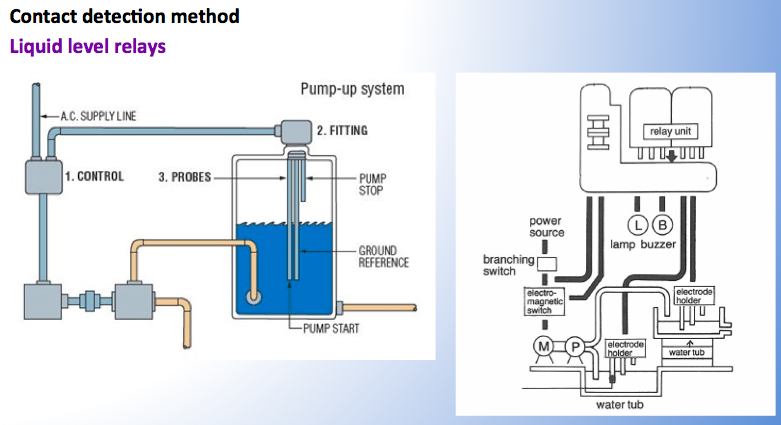
Below are simple explanations of the functions of the various detection methods.


I hope this information help you in your next Kaizen Event.


martes, 7 de octubre de 2014

The 7+1 Mudas (wastes) – For Office, Manufacturing and Supply Chain.

Many people ask me about examples of Mudas (wastes) on 3 main categories, Manufacturing, Office and Supply Chain; for that reason I always share the next table with my customers.


The table do not cover all the possible examples, but gives a general idea about the differences of Mudas , its can be used to Identify the potential projects at Lean Enterprise deployment also.


I hope this help you in your next project.